Guidelines
Childhood lead poisoning guidelines, 1975–2019, from CDC and its Advisory Committee on Childhood Lead Poisoning Prevention (ACCLPP), the American Academy of Pediatrics, the US Preventive Services Task Force, and state health departments.
CDC and ACCLPP
-
 Increased Lead Absorption and Lead Poisoning in Young Children
 Read more →
Cites Dr. Chisolm's 1971 Treatment
CDC statement on increased lead absorption in young children, establishing early screening and intervention guidance.
BLL Actions
Stratifies risk by combining BLL and Erythrocyte Protoporphyrin (EP); Class IV (≥80 µg/100 ml) requires immediate inpatient chelation. Warns against indiscriminate chelation; notes penicillamine remains an unapproved investigational drug.
Treatment
Blood lead >80 µg/dL (symptomatic) or >100 µg/dL (asymptomatic) mandates emergency hospitalization and immediate chelation. Combined intramuscular BAL and CaEDTA every 4 hours for 5–7 days; oral D-penicillamine used 1–6 months to prevent rebound.
Challenge Tests
EDTA mobilization test (single dose, 24-hr urine) resolves complex diagnostic issues. CaEDTA mobilization test recommended exclusively for asymptomatic Class III patients to gauge chelation utility.
Diagnostics
Rapid qualitative urinary coproporphyrin (UCP) prioritizes admission; confirmed by abdominal/long-bone X-rays. Prioritizes simultaneous EP and BLL screening; EP preferred for estimating true tissue burden.
Nutritional Factors
Medicinal iron is strictly contraindicated during acute BAL therapy. Iron and calcium deficiencies redirect lead to soft tissues; mandates treating underlying iron deficiency.
Environmental Interventions
Permanent housing separation required. Mandates local dust/paint control; strictly prohibits hospital release until home hazards are adequately abated.
Focus/Shift
Medical treatment is considered strictly subordinate to environmental removal; no child ever returns to a leaded house. Advocates a balanced approach, declaring screening, medical management, and hazard control equally important.
Citation
Centers for Disease Control. Increased Lead Absorption and Lead Poisoning in Young Children: A Statement by the Centers for Disease Control. Atlanta, GA: US Department of Health, Education, and Welfare; 1975.
-
 Childhood Lead Poisoning Prevention Guidelines
 Read more →
CDC guidelines on childhood lead poisoning prevention, updating screening thresholds and intervention recommendations.
BLL Actions
Lowers intervention threshold to ≥30 µg/dL; hospitalization for symptoms (>49 µg/dL) or asymptomatic consecutive ≥70 µg/dL.
Treatment
Deep IM BAL and CaEDTA every 4 hours for 5–7 days maximizes diuresis; investigational D-penicillamine used post-treatment.
Challenge Tests
CaEDTA test identifies mobile lead; an excretion ratio >1.0 triggers full inpatient chelation therapy.
Diagnostics
Emphasizes simultaneous EP/BLL screening, abdominal X-rays for ingested matter, and long-bone X-rays to detect past absorption.
Nutritional Factors
Iron deficiency independently elevates EP and lead toxicity; mandates nutritional therapy but bans concurrent iron with BAL.
Environmental Interventions
Emergency removal via scraping/wet mopping; permanent reduction via wallboard covering or heat softening.
Focus/Shift
Highly integrated approach demanding strict environmental separation; prohibits hospital discharge until alternative housing is secured.
Citation
Centers for Disease Control. Preventing Lead Poisoning in Young Children: A Statement by the Centers for Disease Control. Atlanta, GA: US Department of Health, Education, and Welfare; 1978.
-
 Childhood Lead Poisoning Prevention Guidelines
 Read more →
Revised CDC guidelines for preventing childhood lead poisoning, lowering the blood lead level of concern and broadening screening criteria.
BLL Actions
Lowers intervention threshold to ≥25 µg/dL; ≥70 µg/dL demands urgent hospitalization.
Treatment
Shifts to continuous IV CaNa2-EDTA infusion (6–24 hours) minimizing distress; identifies DMSA as a promising experimental agent.
Challenge Tests
Standardized outpatient CaNa2-EDTA test; lowered positive threshold (ratio >0.60) triggers 5-day therapy.
Diagnostics
Differentiates lead toxicity from iron deficiency via serum iron/ferritin; introduces portable hematofluorometers for EP field screening.
Nutritional Factors
Recommends low-fat diets; warns against fasting and acidic foods stored in soldered cans; treats calcium deficits.
Environmental Interventions
Explicitly bans dry scraping, sanding, or open flames due to toxic dust generation; mandates barrier covering and wet scrubbing.
Focus/Shift
Establishes a firm hierarchy declaring medical treatment strictly secondary to permanent environmental eradication.
Citation
Centers for Disease Control. Preventing Lead Poisoning in Young Children: A Statement by the Centers for Disease Control. Atlanta, GA: US Department of Health and Human Services; 1985.
-
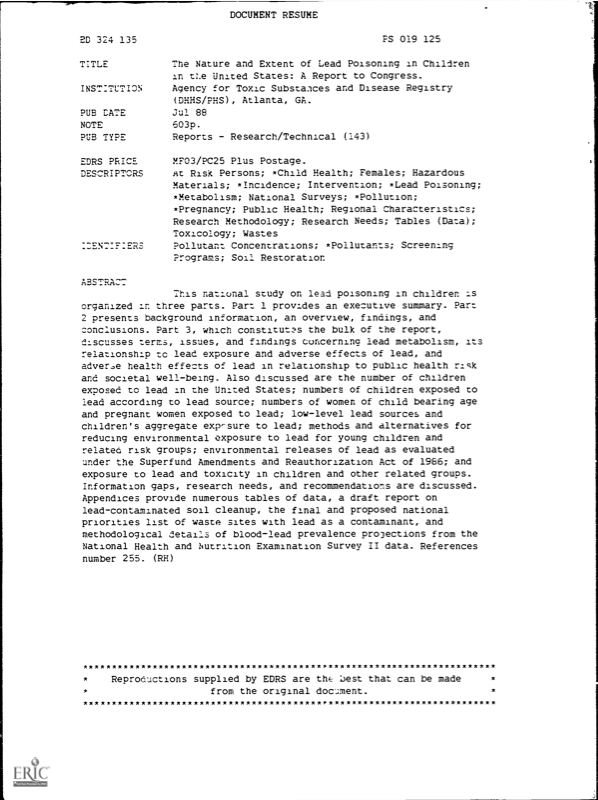 The Nature and Extent of Lead Poisoning in Children in the United States: A Report to Congress
 Read more →
ATSDR report to Congress documenting the scope of childhood lead poisoning in the United States and recommending federal action.
BLL Actions
Recognizes adverse neurobehavioral and developmental effects at 10–15 µg/dL.
Treatment
Medical chelation carries risks of undesirable sequelae (zinc/copper disruption); explicitly deemed infeasible for millions with <25 µg/dL.
Challenge Tests
Provocative chelation reveals children at 25–30 µg/dL possess circulating toxicity risks equivalent to hospitalized patients.
Diagnostics
Highlights EP screening yields excessive false negatives for BLLs <25 µg/dL; whole blood lead is the primary monitor.
Nutritional Factors
Dietary optimization acts as secondary prevention but cannot substitute for environmental abatement.
Environmental Interventions
Evaluates soil interventions; notes dry paint abatement often exacerbates toxicity unless safe “wet” chemical methods used.
Focus/Shift
Marks a definitive paradigm shift away from clinical case-by-case medical management toward population-level environmental eradication.
Citation
Agency for Toxic Substances and Disease Registry. The Nature and Extent of Lead Poisoning in Children in the United States: A Report to Congress. Atlanta, GA: US Department of Health and Human Services; 1988.
-
 Screening Young Children for Lead Poisoning: Guidance for State and Local Public Health Officials
 Read more →
Ends universal screening; shifts CDC to targeted, risk-based screening
The pivotal CDC/NCEH guidance that replaced the 1991 universal blood-lead screening recommendation with targeted, risk-based screening — directing state and local health officials to use local surveillance and housing-age data to decide which children to test. The policy backdrop against which the TLC trial (enrolling 1994–1995) was conducted and later interpreted.
Screening
Replaces CDC's 1991 universal blood-lead screening recommendation with targeted, risk-based screening; state and local health officials develop their own screening plans from local blood-lead surveillance and age-of-housing data.
Decision rule (Table 3.4)
Recommend universal screening where ≥12% of children ages 12–36 months have BLLs ≥10 µg/dL, or where ≥27% of housing was built before 1950; otherwise targeted screening. Targeted screening is triggered by geographic area, high-risk-group membership (e.g., Medicaid), or a 'yes/don't know' on the basic three-question personal-risk questionnaire.
Default rule
Where local data are insufficient to identify low-risk areas, universal screening continues until such data are available to justify a targeted approach.
Medicaid
Universal screening is retained for Medicaid-enrolled children (HCFA/CMS requirement), regardless of local targeting.
Risk assessment
Provides a personal-risk questionnaire (a basic set plus locally adapted questions) for use at well-child visits to decide which children receive a blood-lead test.
Diagnostics & level of concern
Retains 10 µg/dL as the blood lead level of concern and relies on blood lead (not erythrocyte protoporphyrin) as the screening measure; includes diagnostic and follow-up testing schedules by BLL.
Focus/Shift
Concentrates secondary-prevention (case-finding) resources on the highest-risk children while reinforcing housing-based primary prevention — the move framed by CDC as increasing screening where it matters and reducing unnecessary screening of unexposed children.
Citation
Centers for Disease Control and Prevention. Screening Young Children for Lead Poisoning: Guidance for State and Local Public Health Officials. Atlanta, GA: US Department of Health and Human Services, National Center for Environmental Health; November 1997.
-
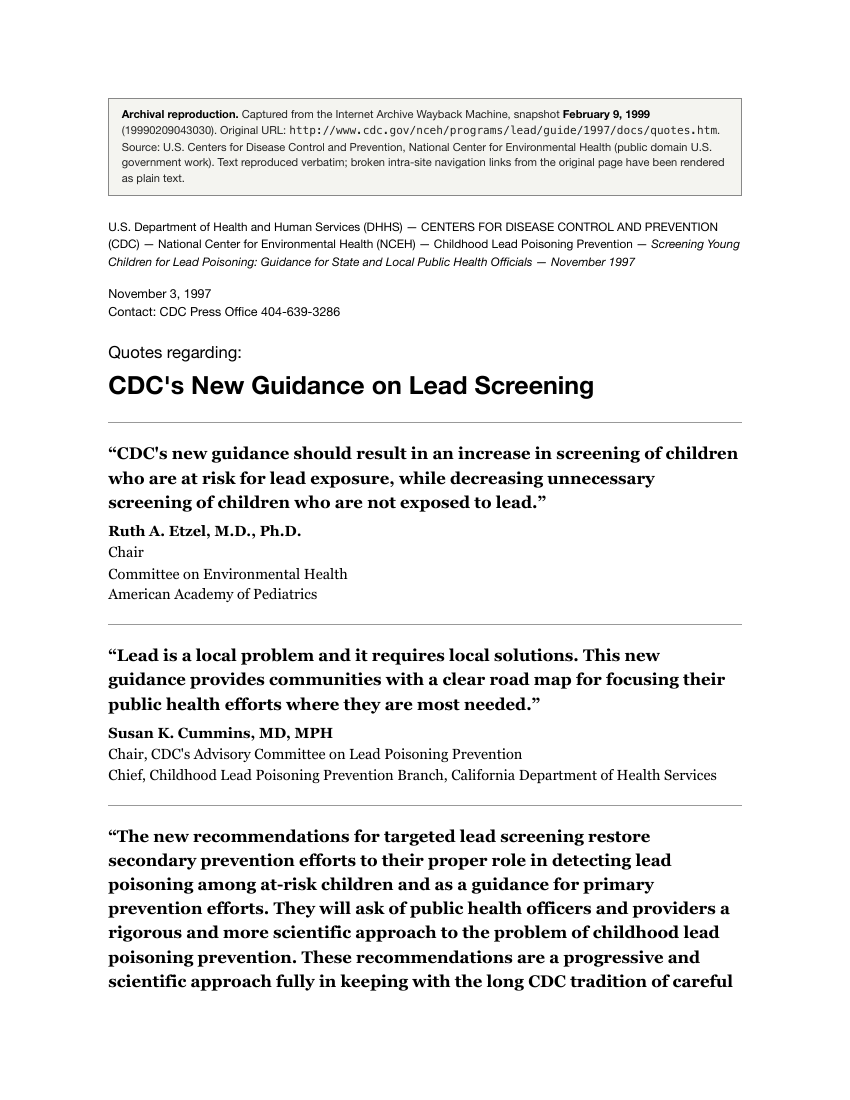 Quotes Regarding CDC's New Guidance on Lead Screening
 Read more →
Press-office quote sheet for the 1997 targeted-screening guidance
CDC Press Office backgrounder (November 3, 1997) issued alongside the new guidance Screening Young Children for Lead Poisoning, gathering endorsement quotes for the shift from universal to targeted, risk-based blood-lead screening. Archived from the CDC/NCEH site via the Internet Archive Wayback Machine.
Companion to Screening Young Children for Lead Poisoning
Guidance for State and Local Public Health Officials (CDC, November 1997) — the document that moved CDC from universal to targeted, risk-based blood-lead screening.
Ruth A. Etzel (Chair, AAP Committee on Environmental Health)
the guidance should increase screening of children at risk for lead exposure while decreasing unnecessary screening of unexposed children.
Susan K. Cummins (Chair, CDC Advisory Committee on Childhood Lead Poisoning Prevention)
“Lead is a local problem and it requires local solutions,” framing the guidance as a road map for locally focused public health efforts.
J. Routt Reigart (Professor of Pediatrics, Medical University of South Carolina)
targeted screening restores secondary prevention to its proper role and asks a more rigorous, scientific approach of public health officers and providers.
Peter Simon (Consultant, CDC ACCLPP)
the guidance begins a campaign to improve community efforts to identify children with lead poisoning.
Citation
Centers for Disease Control and Prevention. Quotes Regarding CDC's New Guidance on Lead Screening [CDC Backgrounder]. Atlanta, GA: National Center for Environmental Health; November 3, 1997. Accessed via Internet Archive Wayback Machine (archived February 9, 1999).
-
 Managing Elevated Blood Lead Levels Among Young Children
 Read more →
ACCLPP recommendations for the management of elevated blood lead levels in young children, including clinical and environmental interventions.
BLL Actions
Maps precise interventions: 10–14 µg/dL (education/monitoring), 20–44 µg/dL (medical evaluation), 45–69 µg/dL (chelation).
Treatment
Acknowledges succimer lowers BLLs but fails to improve neurodevelopmental outcomes; strongly discourages routine chelation <45 µg/dL.
Challenge Tests
Explicitly states provocation or challenge tests are not recommended at any BLL.
Diagnostics
Rejects hair/fingernail testing, long-bone X-rays, and routine renal evaluations.
Nutritional Factors
Correct iron/calcium deficiencies; ensure regular meals since fasting increases lead absorption.
Environmental Interventions
Mandates prompt interim dust control via specialized vacuums and wet mopping; clearance testing <10 µg/ft² on floors.
Focus/Shift
Case management focuses on secondary prevention and coordinating care, acknowledging medical chelation does not reverse neurotoxicity.
Citation
Advisory Committee on Childhood Lead Poisoning Prevention. Managing Elevated Blood Lead Levels Among Young Children: Recommendations from the Advisory Committee on Childhood Lead Poisoning Prevention. Atlanta, GA: Centers for Disease Control and Prevention; 2002.
-
 Preventing Lead Exposure in Young Children: A Housing-Based Approach
 Read more →
ACCLPP guidance on housing-focused primary prevention strategies for reducing lead exposure in children before poisoning occurs.
BLL Actions
Focuses on predicting housing risk to trigger action before BLL elevations occur.
Diagnostics
Incorporates lead hazard screening and dust testing directly into routine home nursing visits or code inspections.
Nutritional Factors
Utilizes WIC, Early Head Start, and Medicaid programs to identify high-risk families for environmental intervention.
Environmental Interventions
Promotes essential maintenance practices (EMPs) and making lead hazards a strict housing code violation.
Remediation
Emphasizes replacing or enclosing building components to minimize on-site removal of intact leaded paint.
Focus/Shift
Firm shift from secondary case management to housing-based primary prevention to achieve Healthy People 2010 goals.
Citation
Advisory Committee on Childhood Lead Poisoning Prevention. Preventing Lead Exposure in Young Children: A Housing-Based Approach to Primary Prevention of Lead Poisoning. Atlanta, GA: Centers for Disease Control and Prevention; 2004.
-
 Using GIS to Assess and Direct Childhood Lead Poisoning Prevention Programs
 Read more →
ACCLPP report on using geographic information systems to target and improve childhood lead poisoning prevention efforts.
BLL Actions
Targets Healthy People 2010 goal to entirely eliminate BLLs >10 µg/dL.
Treatment
Acknowledges children moving into properly remediated units show initial BLL decreases followed by levels <10 µg/dL.
Diagnostics
Integrates Geographic Information Systems (GIS) mapping seamlessly with blood lead screening data.
Data Integration
Links medical screening data with tax assessor property age data.
Environmental Interventions
Maps pre-1950s housing and prior poisoning cases to predict and remediate uninspected hazardous units.
Focus/Shift
Elevates technological infrastructure (geocoding) to systematically target primary prevention resources to geographic “hot spots”.
Citation
Advisory Committee on Childhood Lead Poisoning Prevention. Using GIS to Assess and Direct Childhood Lead Poisoning Prevention Programs. Atlanta, GA: Centers for Disease Control and Prevention; 2004.
-
 Preventing Lead Poisoning in Young Children
 Read more →
ACCLPP guidance on preventing childhood lead poisoning, including screening recommendations and intervention thresholds.
BLL Actions
Re-emphasizes 10 µg/dL is not a toxicological threshold, as adverse effects definitively occur below it.
Treatment
Warns that waiting for elevated BLLs to intervene medically has highly limited effectiveness and takes years to reduce levels.
Diagnostics
Notes that misclassifying 10 µg/dL as a “safe” threshold confuses parents and clinicians, resulting in poor decision-making.
Environmental Interventions
Supports modifying the Integrated Exposure Uptake and BioKinetic (IEUBK) models to predict BLL increases from specific sources.
Clearance
Requires properties undergoing paint abatement or renovation to meet EPA dust clearance testing prior to re-occupancy.
Focus/Shift
Concludes efforts to identify/service individual children <10 µg/dL deflects resources; society-wide primary prevention is the foremost action.
Citation
Centers for Disease Control and Prevention. Preventing Lead Poisoning in Young Children. Atlanta, GA: US Department of Health and Human Services; 2005.
-
 Building Blocks for Primary Prevention: Protecting Children from Lead-Based Paint Hazards
 Read more →
ACCLPP report on strategies for protecting children from lead-based paint hazards through primary prevention and housing policy.
BLL Actions
Extends home assessments to Medicaid families with BLL elevations too low to trigger state abatement requirements.
Diagnostics
Promotes integrating environmental history-taking directly into pediatric medical education curricula.
Environmental Interventions
Proposes sweeping structural tactics: housing trust funds, utility public benefit funds, and revolving funds.
Enforcement
Precludes owners from renting units cited for hazards and reports problem landlords to HUD/EPA.
Tenant Turnover
Requires visual on-site inspections for lead-based paint hazards at tenant turnover.
Focus/Shift
Mobilizes local governments, media, and legal strictures to force landlord compliance and secure financing for remediation.
Citation
Advisory Committee on Childhood Lead Poisoning Prevention. Building Blocks for Primary Prevention: Protecting Children from Lead-Based Paint Hazards. Atlanta, GA: Centers for Disease Control and Prevention; 2005.
-
 Interpreting and Managing Blood Lead Levels Below 10 µg/dL
 Read more →
ACCLPP recommendations on interpreting and managing blood lead levels below the then-current level of concern of 10 µg/dL.
BLL Actions
Details interventions for BLLs <10 µg/dL; acknowledges physical and mental development are affected below this level.
Treatment
Notes early enrichment programs improve cognitive development for high-risk children.
Diagnostics
Highlights laboratory error range (±4 µg/dL) complicates measuring BLLs <10; urges selecting labs achieving ±2 µg/dL.
Screening
Recommends more frequent rescreening for children with BLLs approaching 10 µg/dL.
Environmental Interventions
Notes EPA lowered dust clearance standards in 2001 (40 µg/ft² for floors); but even at 40 µg/ft², 20% of children exceed 10 µg/dL.
Focus/Shift
Emphasizes early referral to developmental programs and strengthening partnerships between providers and housing programs.
Citation
Advisory Committee on Childhood Lead Poisoning Prevention. Interpreting and managing blood lead levels below 10 µg/dL in children and reducing childhood exposures to lead. MMWR Recomm Rep. 2007;56(RR-8):1-16.
-
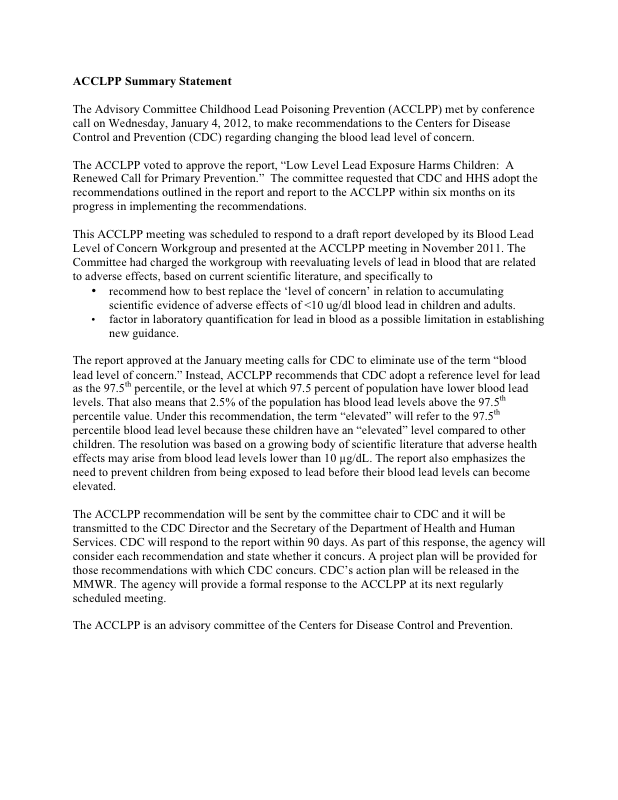 Low Level Lead Exposure Harms Children: A Renewed Call for Primary Prevention
 Read more →
ACCLPP summary report recommending elimination of the 10 µg/dL level of concern and adoption of a reference value based on population data.
BLL Actions
Officially eliminates the term “blood lead level of concern”. Adopts a reference value at the 97.5th percentile (5 µg/dL).
Treatment
Chelation for 20–45 µg/dL lacks therapeutic benefit for cognitive outcomes; reserved strictly for ≥45 µg/dL.
Challenge Tests
Provocative chelation prior to measurement of lead in urine is explicitly rejected and unsupported.
Diagnostics
Venous confirmation essential; BLL ≥5 µg/dL triggers immediate case management and ongoing monitoring.
Nutritional Factors
Assess for iron deficiency per AAP guidelines; treat iron deficiency normally, as iron supplementation remains critical.
Environmental Interventions
Recommends environmental assessments prior to screening high-risk children to abate hazards proactively.
Multi-unit Housing
If one unit in multi-family housing triggers response, all similar untested units must receive action.
Focus/Shift
Absolute shift to primary prevention policy; affirms no safe blood lead level exists.
Citation
Advisory Committee on Childhood Lead Poisoning Prevention. Low Level Lead Exposure Harms Children: A Renewed Call for Primary Prevention. Atlanta, GA: Centers for Disease Control and Prevention; 2012.
-
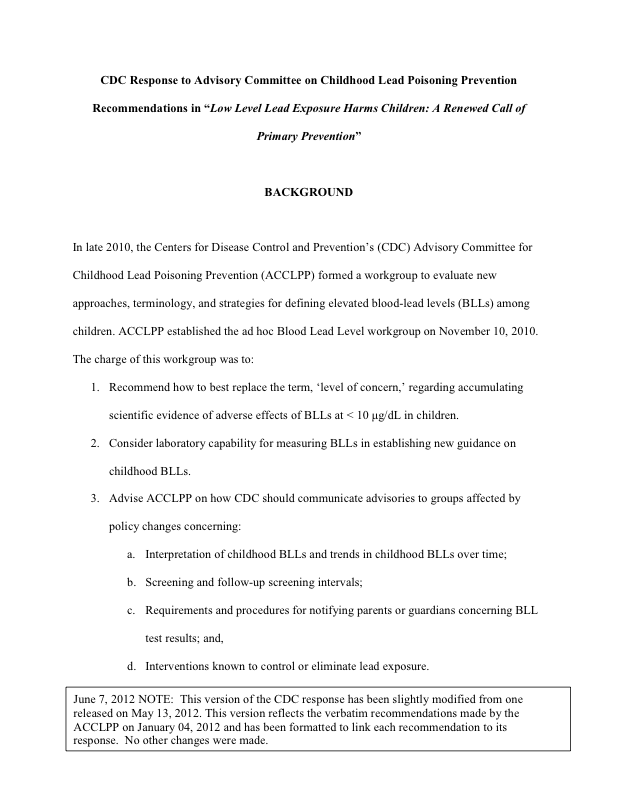 CDC Response to ACCLPP Recommendations
 Read more →
CDC's official response to the 2012 ACCLPP recommendations, adopting the blood lead reference value and updating national guidance.
BLL Actions
Officially eliminates the term “blood lead level of concern”. Adopts a reference value at the 97.5th percentile (5 µg/dL).
Treatment
Chelation for 20–45 µg/dL lacks therapeutic benefit for cognitive outcomes; reserved strictly for ≥45 µg/dL.
Challenge Tests
Provocative chelation prior to measurement of lead in urine is explicitly rejected and unsupported.
Diagnostics
Venous confirmation essential; BLL ≥5 µg/dL triggers immediate case management and ongoing monitoring.
Nutritional Factors
Assess for iron deficiency per AAP guidelines; treat iron deficiency normally, as iron supplementation remains critical.
Environmental Interventions
Recommends environmental assessments prior to screening high-risk children to abate hazards proactively.
Multi-unit Housing
If one unit in multi-family housing triggers response, all similar untested units must receive action.
Focus/Shift
Absolute shift to primary prevention policy; affirms no safe blood lead level exists.
Citation
Centers for Disease Control and Prevention. CDC Response to Advisory Committee on Childhood Lead Poisoning Prevention Recommendations in "Low Level Lead Exposure Harms Children: A Renewed Call for Primary Prevention." Atlanta, GA: US Department of Health and Human Services; 2012.
-
 CDC's Lead Poisoning Prevention Program: A Long-standing Responsibility and Commitment to Protect Children From Lead Exposure
 Read more →
CDC retrospective on the CLPPP, 1970s–2019
CDC-authored historical review of the Childhood Lead Poisoning Prevention Program from the early 1970s through 2019, tracing the evolution of screening recommendations, the progressive lowering of blood-lead thresholds (60 → 5 µg/dL), and program funding.
BLL thresholds progressively lowered
60 µg/dL (1971) → 30 (1975) → 25 (1985) → 10 (1991) → 5 µg/dL reference value (2012, NHANES 97.5th percentile).
Screening
the universal recommendation (1991) shifted to targeted screening (1997) by housing age and sociodemographic risk; CMS retained universal screening for Medicaid-enrolled children.
Funding
CLPPP averaged ~$36M through the mid-2000s, was cut to $2M in FY2012–2013 (effectively defunding state programs), and partially restored to $13M in FY2014.
Citation
Centers for Disease Control and Prevention. CDC's Lead Poisoning Prevention Program: A Long-standing Responsibility and Commitment to Protect Children From Lead Exposure. J Public Health Manag Pract. 2019;25(Suppl 1):S5-S12. doi:10.1097/PHH.0000000000000868
-
 Strategic Plan for the Elimination of Childhood Lead Poisoning
 Read more →
The 1991 ACCLPP strategic plan outlining a national framework for eliminating childhood lead poisoning through prevention, screening, and policy.
BLL Actions
Framework triggers community prevention at ≥10 µg/dL, case management at ≥15 µg/dL, and medical evaluation at ≥20 µg/dL.
Treatment
Acknowledges approximately 5% of children ≥25 µg/dL require inpatient chelation with anticipated post-treatment rebound.
Challenge Tests
Mentions provocative EDTA testing for ≥25 µg/dL to determine the necessity of full therapeutic chelation.
Diagnostics
Replaces EP with direct blood lead measurement due to EP’s severe insensitivity <25 µg/dL.
Nutritional Factors
Endorses targeted educational/nutritional interventions to decrease gastrointestinal lead absorption.
Environmental Interventions
Prioritizes massive infrastructure expansion for safe abatement (encapsulation/removal) with mandatory temporary family relocation.
Focus/Shift
Outlines a 20-year society-wide effort eradicating environmental sources before exposure occurs (primary prevention).
Citation
Centers for Disease Control. Strategic Plan for the Elimination of Childhood Lead Poisoning. Atlanta, GA: US Department of Health and Human Services; 1991.
-
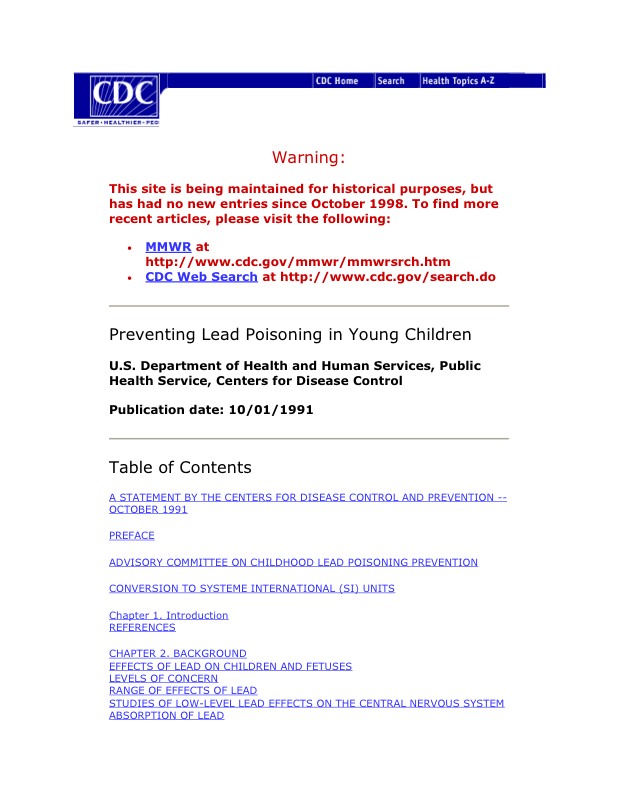 Preventing Lead Poisoning in Young Children
 Read more →
The October 1991 ACCLPP statement lowering the blood lead level of concern to 10 µg/dL and recommending universal screening for young children.
BLL Actions
Establishes formal multi-tier framework: ≥10 µg/dL (community prevention), ≥15 µg/dL (case management), ≥45 µg/dL (chelation).
Treatment
Introduces FDA-approved oral Succimer (DMSA) for levels >45 µg/dL; uses combined BAL/CaNa2EDTA for ≥70 µg/dL.
Challenge Tests
Employs CaNa2EDTA provocative test for 25–44 µg/dL (excretion ratio >0.6 initiates full 5-day course).
Diagnostics
Universal blood lead screening phase-in; requires venous confirmation of elevated capillary tests.
Nutritional Factors
Promotes iron/calcium-rich diets; strictly dictates coexisting iron deficiency must not be treated concurrently with BAL.
Environmental Interventions
Formalizes abatement dictates requiring strict worker protection, HEPA vacuums, and banning uncontained sandblasting.
Focus/Shift
Reinforces the fundamental paradigm shift from secondary case management to primary prevention.
Citation
Centers for Disease Control. Preventing Lead Poisoning in Young Children: A Statement by the Centers for Disease Control. Atlanta, GA: US Department of Health and Human Services; 1991.
American Academy of Pediatrics
-
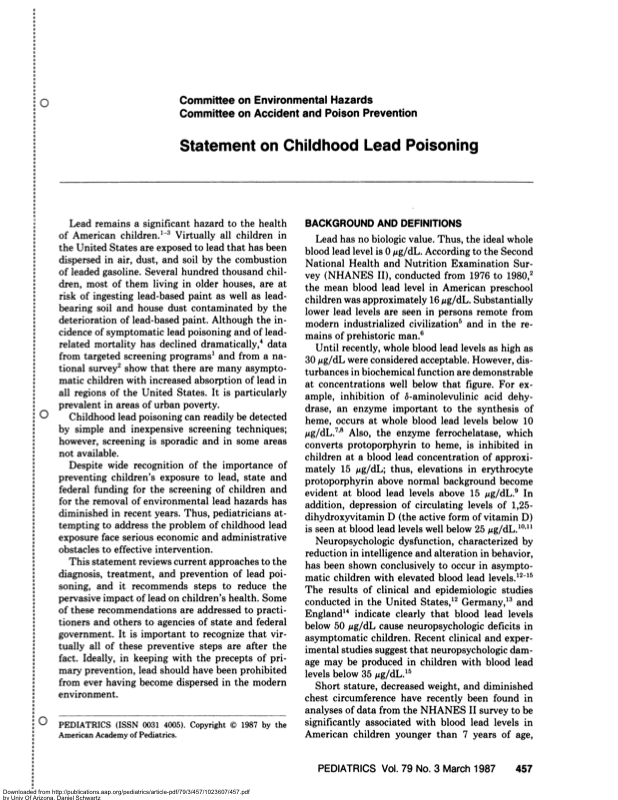 Statement on Childhood Lead Poisoning
 Read more →
American Academy of Pediatrics policy statement on childhood lead poisoning, addressing screening, diagnosis, and treatment recommendations.
BLL Actions
Defines excessive absorption as ≥25 µg/dL with EP ≥35 µg/dL.
Treatment
Utilizes 3–5 days of CaNa2-EDTA to rapidly decrease the mobile, highly toxic fraction of body lead in 25–55 µg/dL range.
Challenge Tests
Relies heavily on lead mobilization test to assess the “mobilizable” pool and determine advisability of full chelation.
Diagnostics
EP is primary screen; requires pre-chelation BUN/creatinine tests to rule out nephrotoxicity risk.
Nutritional Factors
Deficiencies in iron, calcium, and zinc significantly increase gastrointestinal absorption; treating these is a core therapeutic modality.
Environmental Interventions
Complete termination of exposure via thorough wet mopping with high-phosphate detergents and safe paint removal.
Focus/Shift
Emphasizes environmental hazard abatement as the “sine qua non” of intervention, strictly prohibiting children in homes during deleading.
Citation
Committee on Environmental Hazards, American Academy of Pediatrics. Statement on childhood lead poisoning. Pediatrics. 1987;79(3):457-465. doi:10.1542/peds.79.3.457
-
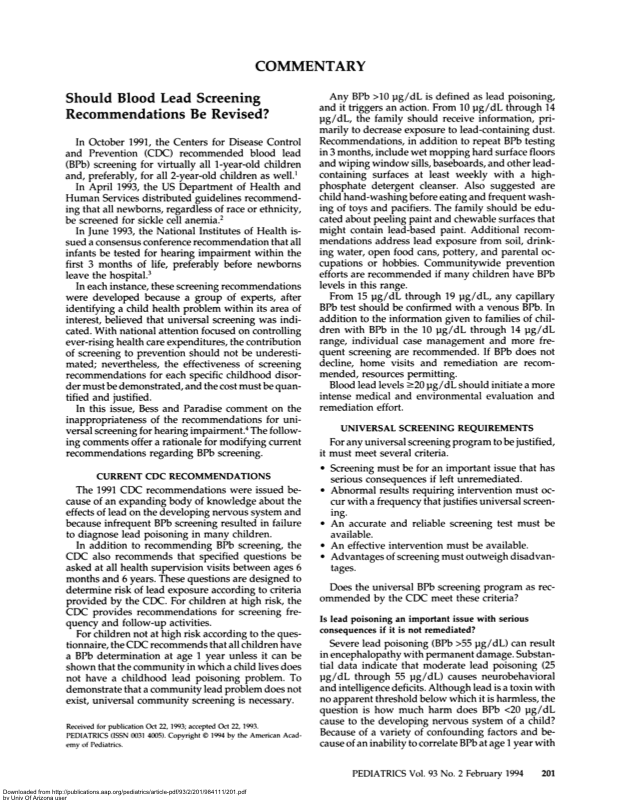 Should Blood Lead Screening Recommendations Be Revised?
 Read more →
AAP committee report evaluating whether universal blood lead screening recommendations should be revised in light of declining prevalence.
Citation
American Academy of Pediatrics, Committee on Environmental Health. Should blood lead screening recommendations be revised? Pediatrics. 1994;93(2):201-204.
-
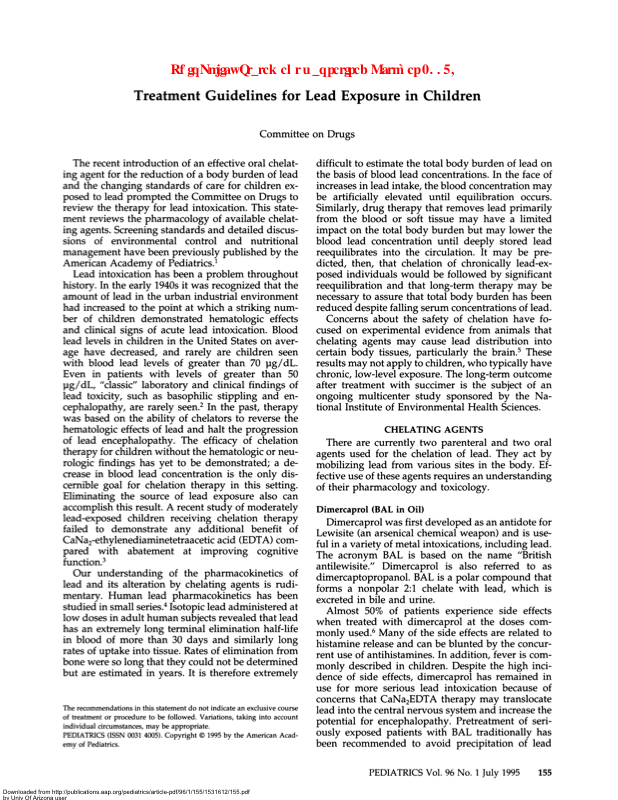 Treatment Guidelines for Lead Exposure in Children
 Read more →
AAP clinical guidelines for the treatment of lead exposure in children, including chelation therapy thresholds and management protocols.
BLL Actions
BLL <25 µg/dL requires aggressive environmental intervention; 45–70 µg/dL indicates succimer or CaNa2EDTA.
Treatment
Recommends oral succimer (30 mg/kg/day); explicitly warns against using CaNa2EDTA alone for encephalopathy.
Challenge Tests
EDTA mobilization test explicitly deemed obsolete due to technical difficulty, expense, and potential toxicity.
Diagnostics
Requires G-6-PD deficiency screening before BAL to prevent severe hemolysis; abdominal X-rays detect enteral lead.
Nutritional Factors
Medicinal iron strictly contraindicated during BAL; zinc supplementation potentially beneficial during long-term CaNa2EDTA.
Environmental Interventions
Bowel decontamination considered an adjunct if enteral lead is visible on radiographs.
Focus/Shift
Emphasizes chelation lacks proven cognitive benefits for low-level exposure; eliminating environmental sources is the only discernible goal.
Citation
American Academy of Pediatrics, Committee on Drugs. Treatment guidelines for lead exposure in children. Pediatrics. 1995;96(1):155-160.
-
 Screening for Elevated Blood Lead Levels
 Read more →
AAP Committee on Environmental Health policy statement updating screening recommendations for elevated blood lead levels in children.
Citation
American Academy of Pediatrics, Committee on Environmental Health. Screening for elevated blood lead levels. Pediatrics. 1998;101(6):1072-1078.
-
 Lead Exposure in Children: Prevention, Detection, and Management
 Read more →
AAP clinical report on the prevention, detection, and management of lead exposure in children, updating pediatric practice recommendations.
BLL Actions
Reaffirms 10 µg/dL as the level of concern but acknowledges IQ drops steeply at <10 µg/dL.
Treatment
Confirms Treatment of Lead-Exposed Children (TLC) trial proves succimer for 20–44 µg/dL does not improve cognitive/neuropsychologic scores.
Challenge Tests
Reaffirms EDTA challenge test is entirely obsolete.
Diagnostics
Shifts toward targeted screening based on local prevalence, though Medicaid children still require universal screening.
Nutritional Factors
Notes no trial data support dietary interventions specifically modulating lead effects, but adequate calcium/iron/vitamin C remain vital.
Environmental Interventions
Highlights that moving children to unleaded homes during abatement is crucial to prevent acute BLL spikes.
Focus/Shift
Notes case-finding alone will not decrease risk; demands integrated housing and public health activities.
Citation
American Academy of Pediatrics, Committee on Environmental Health. Lead exposure in children: prevention, detection, and management. Pediatrics. 2005;116(4):1036-1046. doi:10.1542/peds.2005-1947
-
 Prevention of Childhood Lead Toxicity
 Read more →
AAP policy statement on preventing childhood lead toxicity, endorsing the CDC reference value and calling for stronger regulatory and public health action.
BLL Actions
Adopts CDC reference value of ≥5 µg/dL for case management; notes irreversible cognitive deficits occur <5 µg/dL.
Treatment
Acknowledges no effective medical treatments ameliorate permanent developmental effects.
Diagnostics
Advocates reducing allowable lab error to ±1 µg/dL for BLLs ≤20 µg/dL when feasible.
Screening
Urges testing of immigrant, refugee, and internationally adopted children upon arrival in the US.
Nutritional Factors
Screen for iron sufficiency using complete blood cell count, ferritin, and C-reactive protein.
Environmental Interventions
Recommends EPA/HUD revise downward the allowable levels of lead in house dust, soil, paint, and water.
Regulation
Notes EPA water action level (15 ppb) is not health-based and fails to protect children/pregnant women.
Focus/Shift
Calls for strict, empirically-based legal standards regulating allowable lead across all consumer products and environmental media.
Citation
American Academy of Pediatrics, Council on Environmental Health. Prevention of childhood lead toxicity. Pediatrics. 2016;138(1):e20161493. doi:10.1542/peds.2016-1493
US Preventive Services Task Force
-
 Screening for Elevated Lead Levels in Childhood and Pregnancy: Update of a 1996 U.S. Preventive Services Task Force Review
 Read more →
AHRQ Evidence Synthesis No. 44 — the underlying systematic review supporting the 2006 USPSTF lead-screening recommendation. Cites the TLC trial (Rogan 2001 + ancillary papers) as principal evidence and concludes chelation is not indicated for asymptomatic children with BLL <45 µg/dL. Direct policy predecessor to the 2019 Cantor synthesis.
Citation
Rischitelli G, Nygren P, Bougatsos C, Freeman M, Helfand M. Screening for Elevated Lead Levels in Childhood and Pregnancy: Update of a 1996 U.S. Preventive Services Task Force Review. Evidence Synthesis No. 44. Rockville, MD: Agency for Healthcare Research and Quality; December 2006. AHRQ Contract No. 290-02-0024.
-
 Screening for Elevated Blood Lead Levels in Childhood and Pregnancy
 Read more →
USPSTF updated evidence report and systematic review on screening asymptomatic children and pregnant women for elevated blood lead levels, published in JAMA.
Citation
Cantor AG, Hendrickson R, Blazina I, Griffin J, Grusing S, McDonagh MS. Screening for Elevated Blood Lead Levels in Childhood and Pregnancy: Updated Evidence Report and Systematic Review for the US Preventive Services Task Force. JAMA. 2019;321(15):1510-1526. doi:10.1001/jama.2019.1004
-
 Screening for Elevated Blood Lead Levels in Children: A Systematic Review for the USPSTF
 Read more →
AHRQ Evidence Synthesis No. 174 — the underlying systematic review supporting the USPSTF recommendation statement. More detailed than the JAMA publication.
Citation
Cantor AG, Hendrickson R, Blazina I, Griffin J, Grusing S, McDonagh MS. Screening for Elevated Blood Lead Levels in Children: A Systematic Review for the U.S. Preventive Services Task Force. Evidence Synthesis No. 174. AHRQ Publication No. 19-05250-EF-1. Rockville, MD: Agency for Healthcare Research and Quality; 2019.
State Health Departments
-
 Guidelines for the Detection and Management of Lead Poisoning for Physicians and Health Care Providers
 Read more →
Illinois state guidelines adapting the 1991 federal CDC framework to clinical practice: screening criteria, diagnostic workup, medical management, and community intervention. Produced by the Illinois Childhood Lead Poisoning Prevention Program.
Citation
Illinois Department of Public Health. Guidelines for the Detection and Management of Lead Poisoning for Physicians and Health Care Providers. Springfield, IL: Illinois Childhood Lead Poisoning Prevention Program; April 1992.
-
 Guidelines for the Detection and Management of Childhood Lead Poisoning for Physicians and Health Care Providers
 Read more →
Texas state guidelines for physicians and health care providers on screening, diagnosing, and managing childhood lead poisoning, contemporaneous with the TLC trial enrollment period.
Citation
Texas Department of Health. Guidelines for the Detection and Management of Childhood Lead Poisoning for Physicians and Health Care Providers. Austin, TX: Texas Department of Health; August 1994.